

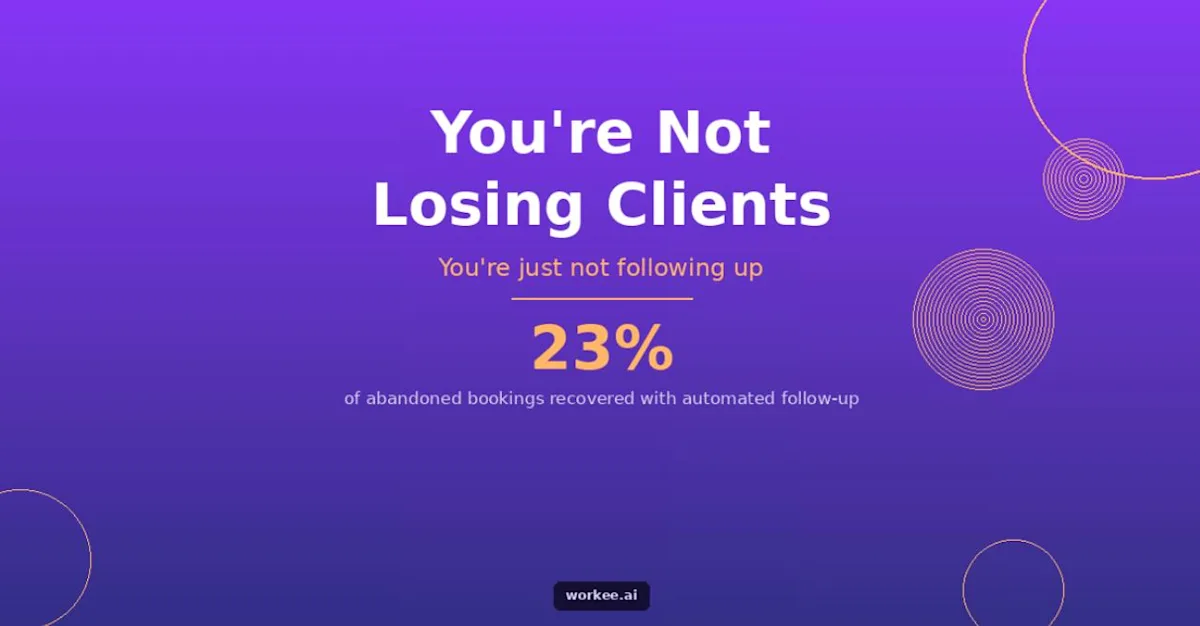
YOU’RE NOT LOSING CLIENTS — YOU’RE JUST NOT FOLLOWING UP
Your client books an appointment, gets excited, then… disappears. A week before their scheduled visit, nothing. No show. You’ve just lost a client, a service fee, and a slot in your calendar that could’ve paid your staff’s time.
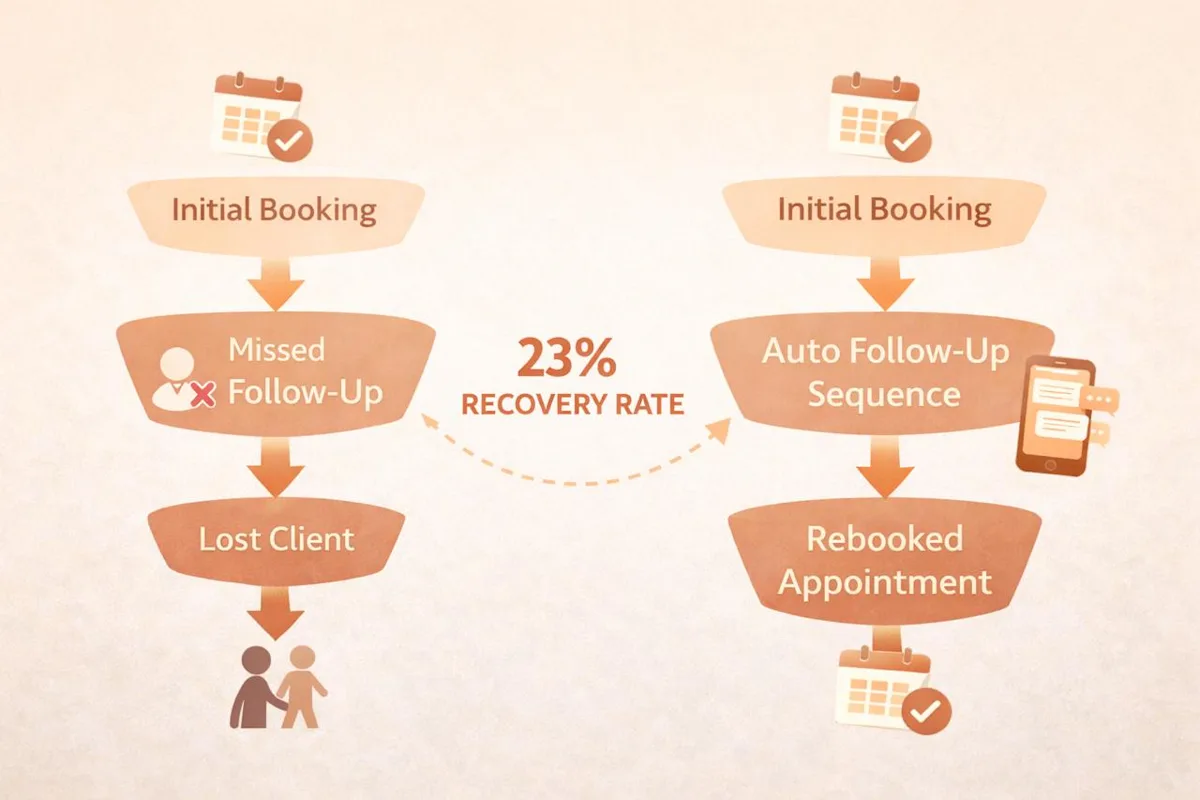
Here’s what most salon and med spa owners don’t realize: you’re not actually losing these clients. You’re just not following up with them. And the numbers prove it—we’ve recovered 11 abandoned bookings out of 48 attempts (23% recovery rate) with a simple automated follow-up strategy. That’s real revenue walking back through your door.
How Many Clients Are You Actually Losing Right Now?

Most of your no-shows aren’t because clients forgot about you or decided your services weren’t worth it. They canceled plans, got busy, or genuinely forgot.
Here’s the reality: a client who books with you has already made a commitment. They’ve already said yes. The problem isn’t the sale—it’s the reminder.
Think about your own life. You book a haircut three months out. Life happens. A month before your appointment, you get an email reminder. Great. Two weeks out, another text. Perfect. But what if nobody reached out? How many of those appointments would you actually keep?
That’s exactly what’s happening in your business right now. Clients aren’t abandoning you—they’re getting lost in the chaos of their own schedules.
Why One Touchpoint Isn’t Enough
You send a reminder. That’s it. One email, maybe a text 24 hours before the appointment.
But modern marketing research is clear: most clients need between 7 and 13 touchpoints before they take action. That’s not excessive. That’s reality.
For a booked appointment, the stakes are slightly different—they’ve already committed. But they still need reminders, incentives, and reasons to show up on time.
Here’s what a real follow-up sequence looks like:
Booking confirmation
(immediate) — Confirms the appointment and builds confidence
2-week pre-appointment
— Reminds them, maybe suggests they book a prep appointment or purchase a product
1-week reminder
— Quick, friendly check-in
48-hour reminder
— Increases urgency, maybe includes a small perk (“Bring a friend and get 15% off”)
24-hour reminder
— Simple, direct, maybe with location/parking info
Day-of confirmation
— Text or call just to confirm they’re still coming
Then, if they don’t show: a warm follow-up asking if everything’s okay and offering to reschedule.
That’s not harassment. That’s giving yourself every possible chance to keep the appointment on the books.
The Case Study: 48 Abandoned Bookings, 11 Recovered
Let’s look at real numbers from a salon and med spa community we work with.
The situation: They were seeing consistent no-shows and cancellations. Clients would book appointments weeks in advance, get excited, then ghost.
The solution: They implemented an automated follow-up sequence with strategic touchpoints. Not aggressive—just thoughtful reminders at moments when clients are most likely to need a nudge.
The result: 11 out of 48 abandoned bookings were recovered. That’s 23% recovery rate.
For a salon or med spa with 100 monthly bookings, this strategy could recover nearly 23 additional revenue-generating appointments per month. At an average service price of $85-150, that’s $1,955-$3,450 in recovered monthly revenue. That’s nearly $25,000-$41,000 per year from clients who were already yours—you just needed to keep them engaged.
This isn’t speculative. This is what happens when you prioritize follow-up.
The Difference Between Manual and Automatic Follow-Up
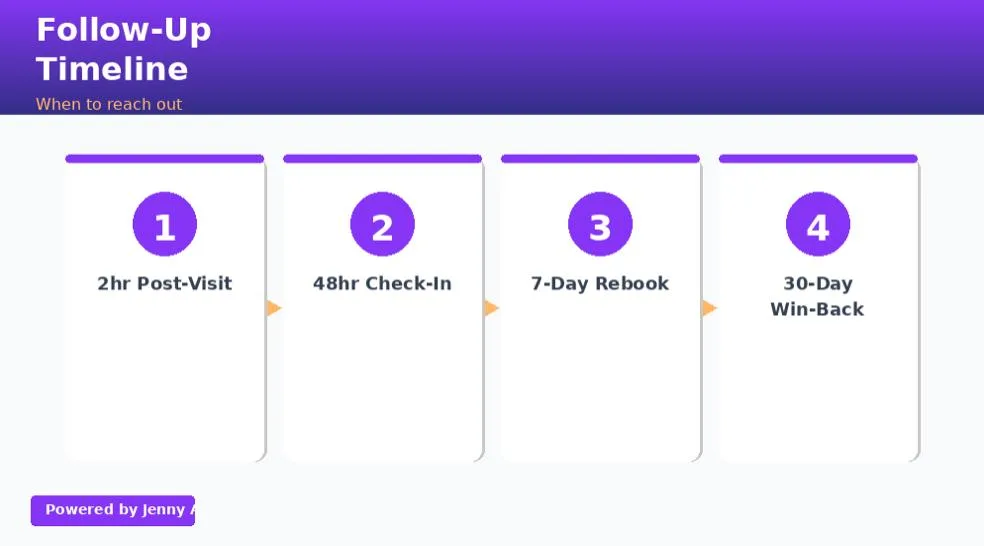
Here’s where most salon owners get stuck. They understand that follow-up matters. They’ve even tried it.
But then life gets in the way. You’re running services, managing staff, handling walk-ins. You can’t personally send a thoughtful text to every client two weeks before their appointment. That’s not realistic.
Manual follow-up fails because it requires consistency, and consistency is hard when you’re running a business.
Automatic follow-up wins because it removes the human variable. Once it’s set up, it works. Every client gets the same sequence. No appointment slips through. No client gets forgotten because you were too busy.
This is where Jenny AI Marketing Assistant comes in. Instead of relying on memory or spreadsheets, Jenny runs follow-up sequences automatically. Personal welcome messages, appointment reminders, post-service check-ins, and win-back campaigns all happen without you lifting a finger.
The result? Your clients feel taken care of. Your no-shows drop. Your revenue increases. Your team isn’t stressed about manual outreach.
What Successful Follow-Up Actually Sounds Like
Not all follow-up is created equal. Poorly timed messages feel like spam. Too many feel aggressive. Not enough feel like you don’t care.
Here’s what works:
Personality matters. Your follow-up should sound like your business, not a robot. “Can’t wait to see you!” lands different than “Reminder: appointment scheduled.”
Timing is everything. A reminder two weeks out is useful (gives them time to rearrange schedules). A reminder one hour before their appointment is essential (catches last-minute cancellations).
Give them a reason to show up. “See you Thursday!” is a reminder. “See you Thursday for your brow lamination—bring a friend and you’ll both get 15% off your next service” is a conversation starter.
Acknowledge their life. A simple “Let us know if you need to reschedule” removes friction. They’re not stuck with an appointment they can’t keep.
Make it personal. Use their name. Reference their last service or their favorite stylist. Show them you remember them.
When follow-up feels warm instead of transactional, clients respond. They show up. They cancel respectfully so you have time to fill the slot. They might even book their next appointment while they’re in the chair.
What Happens When You Recover Just 10 Clients Per Month
Let’s do the math for your clinic.
If you recover just 10 abandoned bookings per month through better follow-up, and your average service is $100:
Monthly recovery:
$1,000
Annual recovery:
$12,000
Now add retail. Clients who show up spend an average of 15-20% more on add-ons and retail products. That’s another $150-200 per month in recovered transactions.
Your bottom line: $12,000-14,400 per year from clients who already booked with you. Clients you were about to lose.
This isn’t new customer acquisition. This is client retention through the most underrated marketing tactic in the beauty and wellness industry: actually following up.
Ready to Stop Losing Clients to Forgotten Appointments?
The difference between a 50% no-show rate and a 10% no-show rate isn’t better clients. It’s better follow-up.
Workee’s Jenny AI Marketing Assistant handles the entire follow-up sequence for you—from booking confirmation to win-back campaigns for clients who’ve gone quiet. Your clients get the reminders they need, your calendar stays full, and you stop leaving money on the table.
Book a 15-minute demo call to see how Jenny can recover lost bookings and keep your appointment schedule full. We’ll show you exactly how to turn one-time visitors into loyal, returning clients.
FAQ: Client Follow-Up & Appointment Recovery
Q: How soon after booking should I send the first reminder? A: Send a booking confirmation immediately (within 2 hours of booking). Then your next meaningful touchpoint should be 2-3 weeks before the appointment. This gives them enough notice to rearrange plans if needed, and it feels helpful rather than annoying.
Q: What if a client gets annoyed by multiple reminders? A: Clients who prefer fewer reminders can opt into a lighter sequence (just the 24-hour reminder, for example). The key is giving them control. But most clients—especially when reminders include helpful information (like “park in back” or “bring your insurance card”)—actually appreciate the touchpoints.
Q: Should I follow up differently for different service types? A: Yes. Someone booking a $200 lash extension appointment needs more touchpoints than someone booking a $20 manicure. Higher-ticket services have higher no-show rates, so they justify more follow-up. Jenny can customize sequences based on service type, price point, and client history.
Q: How do I know if my follow-up is working? A: Track no-show rates month-to-month. You should see a measurable decline (we typically see 20-40% improvement). Also watch for increased revenue from recovered bookings and client feedback that says something like “I appreciated the reminder.”
Q: Can follow-up help with last-minute cancellations? A: Absolutely. A 24-hour and same-day reminder gives clients a final chance to cancel respectfully if something’s come up. This actually means you can fill that slot with a waitlist client or schedule admin work. It’s a win either way.
Q: What’s the best channel for follow-up—email, text, or both? A: Text is fastest for urgent reminders (24-48 hours out), but email works for longer-term messaging (2+ weeks). Ideally, you use both in sequence. A client who doesn’t see your email might catch your text. A client who prefers email doesn’t feel spammed with texts.
Q: Should I follow up with clients who’ve already canceled? A: Yes, but differently. A canceled appointment is an opportunity to reschedule (win-back campaign) or ask what went wrong. Something like “We noticed you canceled—everything okay? We’d love to reschedule” shows you care and gives you data about why clients are backing out.
SCHEMA NOTE: Mark up this FAQ section with FAQPage schema markup in your HTML rendering to improve chances of appearing in Google’s FAQ rich results.
The Bottom Line
You’re not losing clients. You’re not pricing wrong. You’re not even providing bad services.
You’re just not following up consistently.
The clients who abandoned their bookings? 23% of them will come back if you simply remind them, reach out warmly, and give them a reason to commit again. That’s real money. That’s real business growth.
Start with a simple 5-step follow-up sequence: confirmation, 2-week reminder, 1-week reminder, 48-hour reminder, and 24-hour reminder. If you do it manually, you’ll miss appointments. If you automate it with Jenny, you’ll recover them.
Your competitor is probably handling follow-up the same way you are—inconsistently, manually, and incompletely. This is where you pull ahead.
Book a 15-minute demo with Workee to see how Jenny AI automatically manages follow-up and recovers abandoned bookings. We’ll show you exactly how to turn “almost lost” clients into loyal repeaters.



Keep updated about latest industry insights and subscribe to our newsletter
Follow Us


