

How to Get Your Med Spa Found in ChatGPT Search

In short: Nobody can guarantee a med spa will be recommended in ChatGPT Search, but you can improve the conditions for discovery. Allow OAI-SearchBot to fetch your public pages, publish accurate and specific clinic information, support health and reputation claims, and make sure trustworthy public sources corroborate key facts. Then measure whether cited visits reach a useful booking destination.
There is no switch that guarantees a med spa will be recommended in ChatGPT Search. OpenAI says ranking uses factors intended to surface reliable, relevant information and that top placement cannot be guaranteed. A clinic can still improve the conditions for discovery: allow the search crawler, publish accurate and specific clinic information, make important pages easy to reach, support health and reputation claims, and measure whether cited visits reach a useful booking destination.
Start with four questions:
Can OAI-SearchBot fetch the clinic's public pages?
Can a reader verify the clinic's name, location, services, credentials, policies, and booking path?
Do trustworthy public sources corroborate important facts?
Can the team measure ChatGPT referrals and the actions that follow?
This is not prompt engineering. It is the work of making a real clinic understandable and verifiable on the public web.
For internal staff uses of ChatGPT, use Workee's separate med spa ChatGPT prompts guide and AI for med spas guide. Those pages cover prompt libraries and clinic automation; this page stays focused on external search discovery.
What “ChatGPT visibility” means
A clinic can appear in several ways:
as a source link or citation in a searched answer;
as a named option in a local or service comparison;
as the answer to a branded question;
as a page a user opens after ChatGPT surfaces it.
These are not the same result. A source citation does not guarantee a recommendation. A recommendation does not guarantee a qualified visit. A visit does not guarantee a booking.
OpenAI says ChatGPT Search may work with third-party search providers and may rewrite a user's question into one or more targeted searches. It can also use optional location information to improve local recommendations. That makes clear public facts and local context useful, but OpenAI does not publish a checklist that guarantees ranking.
Step 1: pass the crawl-inclusion check
OpenAI's publisher guidance says a public website can appear in ChatGPT Search and that publishers should not block OAI-SearchBot if they want content included in summaries and snippets.
Ask the website or infrastructure owner to verify:
robots.txtdoes not disallow OAI-SearchBot from the required paths;the host, CDN, firewall, or bot-protection layer allows traffic from OpenAI's published search-crawler IP ranges;
the homepage, location pages, service pages, team pages, and booking destination return a successful response without login;
the pages do not carry an unintended
noindex;canonical tags point to the preferred public URL;
important URLs appear in a current sitemap;
internal links lead to them from crawlable pages;
server or CDN logs show whether the crawler receives
200,403,429, or another response.
Robots permission is necessary for predictable crawling, but it does not promise selection or rank. A wildcard Allow may already permit the bot; an explicit rule is not a ranking feature. Test the actual response through every infrastructure layer.
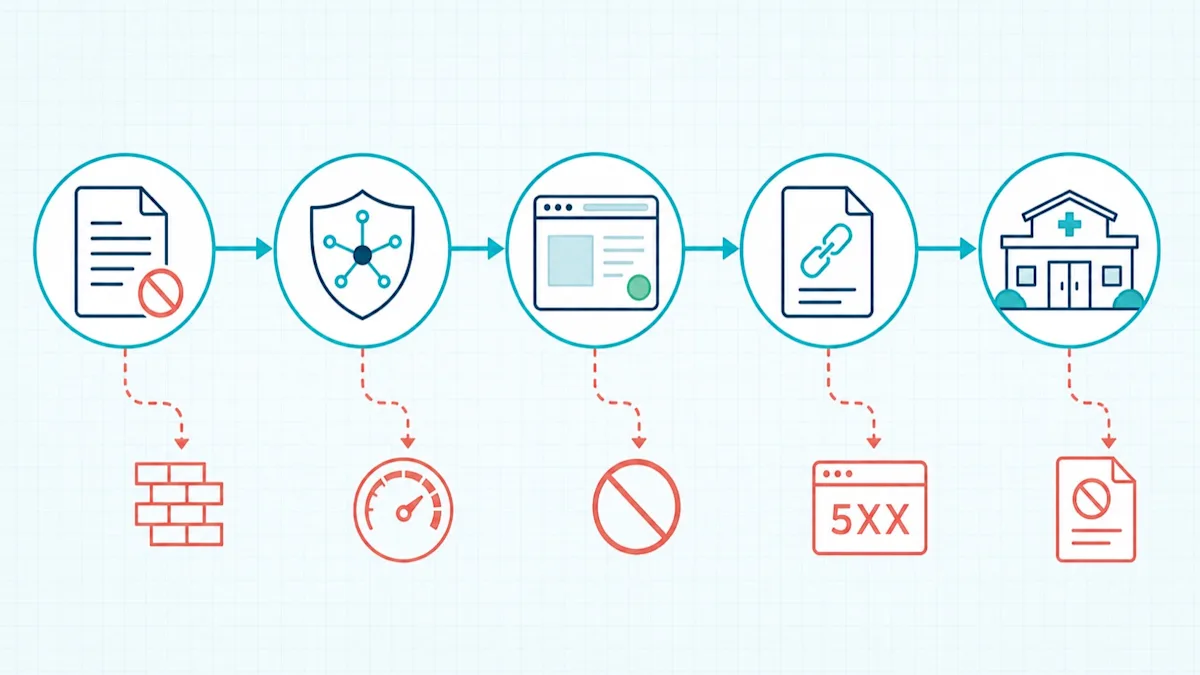
Check each access layer separately; crawler permission alone does not prove the page can be fetched or selected.
OAI-SearchBot and GPTBot do different jobs
OpenAI's publisher FAQ separates the search crawler from the training crawler. OAI-SearchBot supports search discovery. GPTBot controls potential training use. A clinic may allow search crawling while disallowing GPTBot. Do not treat a GPTBot block as proof that ChatGPT Search is blocked; inspect the rule that applies to OAI-SearchBot.
Step 2: create one authoritative clinic fact sheet
Create an internal source of truth for facts that should appear publicly:
real-world business name;
street address or accurately described service area;
public phone and contact method;
regular and special hours;
location-specific services;
provider names, roles, and credentials the clinic is permitted to publish;
medical-director or supervising-clinician information when accurate, appropriate, and legally approved;
consultation, booking, deposit, cancellation, accessibility, and financing information;
the preferred booking URL for each location or service.
Assign one owner and a review date to every field. Then compare the fact sheet with the website, Google Business Profile, professional directories, licensing sources, social profiles, and major booking pages.
This is an operational recommendation, not a claim about an unpublished ChatGPT ranking factor. Consistent facts reduce ambiguity for people and for systems that must reconcile public sources.
Step 3: make location pages answer local questions
Each real clinic location needs a useful page that states:
the location name and address;
how to contact and reach the clinic;
current hours;
services actually offered there;
providers who work there when approved for publication;
what happens before a first appointment;
the relevant booking action;
material location-specific policies or accessibility information.
Avoid swapping only a city name across many pages. A location page should contain information a prospective client can verify and use.
This location-page work is one part of the channel mix. Route broader acquisition planning to the med spa marketing strategies guide, which owns SEO, paid, social, email, referrals, and other marketing channels.
Keep the clinic's Google Business Profile accurate and complete as a separate local-search task. Google says its local results depend mainly on relevance, distance, and prominence and that complete, accurate business information helps it understand the business. That is evidence for Google, not proof of a ChatGPT ranking rule. Use the 90-day med spa local SEO plan for the Google-specific workflow.
Step 4: publish service pages that can support an answer
A service page should answer the questions the clinic is qualified and prepared to answer publicly:
What is the service?
Who provides it at this location?
What is included in the appointment?
Is a consultation required?
How long is the booked appointment?
What does the clinic charge or how is a personalized quote obtained?
What deposit, cancellation, or rescheduling rules apply?
What is the next step?
Have an appropriately qualified reviewer approve clinical statements. Do not turn the page into individualized medical advice. Avoid unsupported statements about safety, efficacy, pain, downtime, permanence, suitability, or typical results.
The Federal Trade Commission says express and implied health-related advertising claims must be truthful, not misleading, and adequately substantiated. That standard applies to websites and digital content, not only paid ads.
Use concise, self-contained answers
Place a direct answer near the relevant heading, then explain limitations and next steps. Examples:
“This location offers [service] after an in-person consultation.”
“The appointment is scheduled for [approved duration], but treatment time may vary.”
“Pricing starts at [approved amount], with a final quote after [approved assessment].”
“Clients can review the cancellation policy before booking.”
Only publish a statement the clinic can keep current. If price, provider, or availability changes often, connect the page to a maintained source rather than hardcoding stale information in multiple places.
Step 5: keep visible facts and structured data aligned
Google documents LocalBusiness structured data as a way to tell Google about business details such as hours and departments. Use it when it accurately describes visible page content and follows Google's guidelines.
Do not claim that schema markup guarantees a ChatGPT citation. OpenAI's public search guidance does not make that promise. The practical rule is simpler: visible text, canonical URLs, structured data, business profiles, and booking pages should not contradict one another.
For every location, compare:
name;
address;
phone;
hours;
URL;
service availability;
booking URL.
Correct the source of the conflict, not only the markup.
Step 6: publish trustworthy proof without creating compliance risk
Useful evidence may include:
named provider biographies with verifiable credentials;
links to applicable public licensing sources;
original explanations reviewed by qualified staff;
dated policies;
transparent authorship and update dates;
real reviews and testimonials presented under the clinic's approved process;
earned local or professional coverage;
clear corrections when a public fact changes.
Do not fabricate reviews, hide incentives, or present an atypical result as the expected result. The FTC's consumer-review rule and endorsement guidance apply to how businesses collect and present reviews and testimonials.
Before-and-after images and testimonials can communicate implied health or appearance claims. Obtain the required permissions and substantiation, and have qualified legal and clinical reviewers approve the use. More proof is not better when it is misleading, unverified, or privacy-invasive.
Step 7: run a fixed citation audit
A citation audit is more useful than asking ChatGPT whether your SEO is good. Create a small, repeatable test set and record exactly what appears.
Test categories such as:
Brand facts
“Where is [clinic] located?”
“What services does [clinic] offer at [location]?”
“How do I book with [clinic]?”
Local discovery
“Med spas in [city] that offer [service]”
“Aesthetic clinics near [neighborhood] with online booking”
“Compare med spas in [city] for [non-clinical decision criterion]”
Policy and access
“Does [clinic] require a consultation for [service]?”
“What is [clinic]'s cancellation policy?”
“Is [clinic] accessible and where should I park?”
For each prompt, record:
test date;
general or precise location setting;
exact wording;
whether web search was used;
clinics named;
source URLs cited;
whether the answer is accurate;
the correction owner;
the page that should support the answer.
Do not run dozens of paraphrases until the clinic appears. Use the same prompt set at regular intervals so changes mean something. Results can vary by location, wording, timing, and available sources.
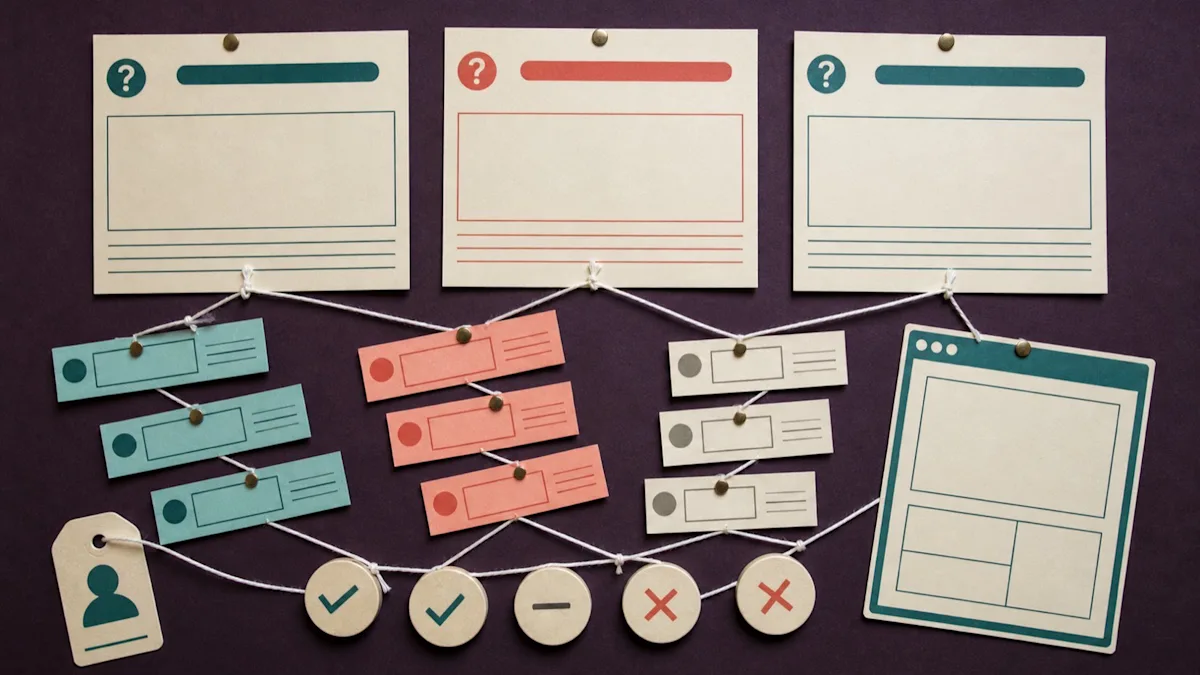
A fixed audit records the same prompts, sources, accuracy checks, and correction owners over time.
Step 8: fix the missing evidence, not the answer
When the answer is wrong or absent, diagnose the evidence path:
Crawler cannot fetch the page: fix robots, CDN, firewall, rate limiting, authentication, or response errors.
Business fact is wrong: correct the website and authoritative public profiles.
Service is missing: improve the real service and location page; do not create unsupported doorway pages.
Another source is cited: compare what that source explains more clearly or credibly.
The page is cited but users do not act: improve the destination and booking step.
Clinical statement is inaccurate: remove or correct it through the clinic's qualified review process.
Do not publish a new article for every wording variant. Strengthen the page that owns the intent.
Step 9: connect the cited visit to a booking path
Visibility has little business value if the cited page has no clear next action. A service or location page should lead to the right consultation, service, or contact path—not a generic homepage when a more specific destination exists.
Workee's published pages describe a professional website, public expertise information, bookable services, price and duration settings, provider availability, online payment, and client booking records. Those capabilities can support the destination after a person visits the clinic's page.
The Workee website solution describes the public website and service setup, while booking and scheduling covers the appointment destination. For visual conversion patterns rather than AI-search diagnostics, see the separate best med spa websites guide.
Workee does not control OAI-SearchBot, ChatGPT ranking, citations, or recommendations. Its published marketing-conversion claims relate to documented connected channels; this article does not claim native ChatGPT attribution.
OpenAI says ChatGPT referral URLs include utm_source=chatgpt.com. Track that traffic in the clinic's web analytics, then use the approved booking and reporting process to compare visits, booking-page actions, completed bookings, and revenue without claiming causation from a small sample.
A 30-day implementation plan
Days 1–3: technical access
review
robots.txt;test key URLs with the OAI-SearchBot user agent;
check CDN and firewall logs;
resolve blocked, redirected, error, login, and
noindexstates;verify canonical and sitemap coverage.
Days 4–10: clinic entity
approve the clinic fact sheet;
correct the website and major public profiles;
assign a permanent owner for hours, providers, services, and booking links.
Days 11–20: answer-ready pages
improve one priority location page;
improve two priority service pages;
add direct answers, qualified reviewers, update dates, and specific booking actions;
make visible facts and any structured data agree.
Days 21–25: trust review
verify provider credentials;
audit testimonials, disclosures, and health claims;
correct stale or unsupported statements;
identify legitimate third-party sources that need factual updates.
Days 26–30: measurement
run the fixed citation audit;
annotate inaccurate answers and cited sources;
create a
chatgpt.comreferral view in analytics;document booking-path actions and responsible owners;
schedule the next monthly review.
Measure discovery, accuracy, and business action separately
Use three groups of measures.
Discovery
key pages successfully fetched by OAI-SearchBot;
priority URLs present in the sitemap;
prompts in the fixed set that produce a relevant source citation;
citations to the preferred canonical page.
Accuracy
correct name, location, hours, services, providers, policies, and booking URL;
incorrect claims awaiting correction;
stale pages beyond their review date.
Business action
utm_source=chatgpt.comreferral sessions;engaged visits;
visits to service and booking pages;
booking CTA interactions;
started and completed bookings;
revenue and assisted conversions under the clinic's approved attribution method.
Do not combine these into a made-up “AI visibility score.” A clinic can improve accuracy before it gains traffic, and a cited visit can be useful even when volume is small.
Treat AI visibility as an evidence and conversion system, not a ranking trick.
Frequently asked questions
Can I guarantee my med spa will rank in ChatGPT Search?
No. OpenAI says there is no way to guarantee top placement. You can improve crawl access, relevance, factual clarity, trust, and the booking destination, but selection remains outside the clinic's control.
Should I allow OAI-SearchBot if GPTBot is blocked?
The two user agents serve different purposes in OpenAI's publisher guidance. OAI-SearchBot supports search discovery, while GPTBot controls potential training use. A publisher can set different rules for them.
Does LocalBusiness schema make a med spa appear in ChatGPT?
OpenAI does not publish that guarantee. Google documents LocalBusiness structured data for Google Search and Maps. Use accurate markup that matches visible content, but do not present it as a ChatGPT ranking switch.
How long does ChatGPT visibility take to improve?
OpenAI does not publish a guaranteed timeline. Track technical access immediately, review citations monthly with a fixed prompt set, and evaluate referral and booking trends over a longer period rather than promising a date.
Can Workee get my med spa recommended in ChatGPT?
No software can guarantee that outcome. Workee can support the public website and booking destination described on its product pages. Crawler access, public evidence, third-party corroboration, and ChatGPT selection remain separate.
Make the next step as clear as the evidence
Once the clinic's facts and pages are trustworthy, give visitors a specific way to act. See how Workee supports a professional clinic website and booking flow, then review whether the service, location, price, duration, availability, and next step remain accurate from source page to completed booking.



Keep updated about latest industry insights and subscribe to our newsletter
Follow Us


