

Med Spa No-Show Text and Email Templates: 14 Scripts
In short: A useful no-show message acknowledges the missed visit, protects the relationship and makes the next step obvious, without a long explanation or hard sell. Confirm the appointment status and policy outcome first, replace every placeholder, keep service and health details out unless approved for that channel, and offer one way to rebook. Adding a promotion can change which rules apply, and the right person should review any clinical or sensitive reply.
A useful no-show message does three things: acknowledges the missed visit, protects the relationship, and makes the next step obvious. It does not need a long explanation or a hard sell.
The 14 templates below cover same-day check-ins, next-day follow-ups, policy notices, disputes, repeat no-shows, opt-outs, and record corrections. Replace every bracketed field, confirm the appointment status and policy outcome, and have the appropriate person review any clinical or sensitive reply.
These are operational copy examples, not legal advice. Your message purpose, clinic type, location, contracts, and communication practices can change which rules apply.
Before you copy a no-show template
First decide what the message is doing. A message that only addresses a missed appointment and offers a route to reschedule may be operational or relationship-focused. A message that adds an offer, promotes another service, or tries to sell a package may be commercial marketing.
That distinction matters. The FTC says the primary purpose of an email determines whether the CAN-SPAM Act treats it as commercial or transactional or relationship content. Adding promotional copy can change the analysis. Text-message rules, state laws, privacy obligations, and carrier requirements may also apply.
For organizations subject to HIPAA, HHS says appointment reminders are part of treatment and may be made without authorization. That does not make every message or channel automatically appropriate. HHS also advises providers to use reasonable safeguards, limit the information disclosed in voicemail or email, verify contact details, and accommodate reasonable requests for confidential communications.
This page starts after a missed appointment has been confirmed. Pre-visit prevention and vendor evaluation belong in the separate guide to appointment reminder software.
Use this pre-send check:
Confirm the correct client, appointment, location, and status.
Use only the contact channel and address the clinic is authorized to use.
Keep treatment, service, and health details out unless the clinic has approved them for that channel.
Match the message to the clinic's published, accepted policy.
Give one clear next step and a staffed alternative.
Route clinical questions, distress, complaints, identity conflicts, and policy disputes to a person.
Record and honor opt-outs and communication preferences.
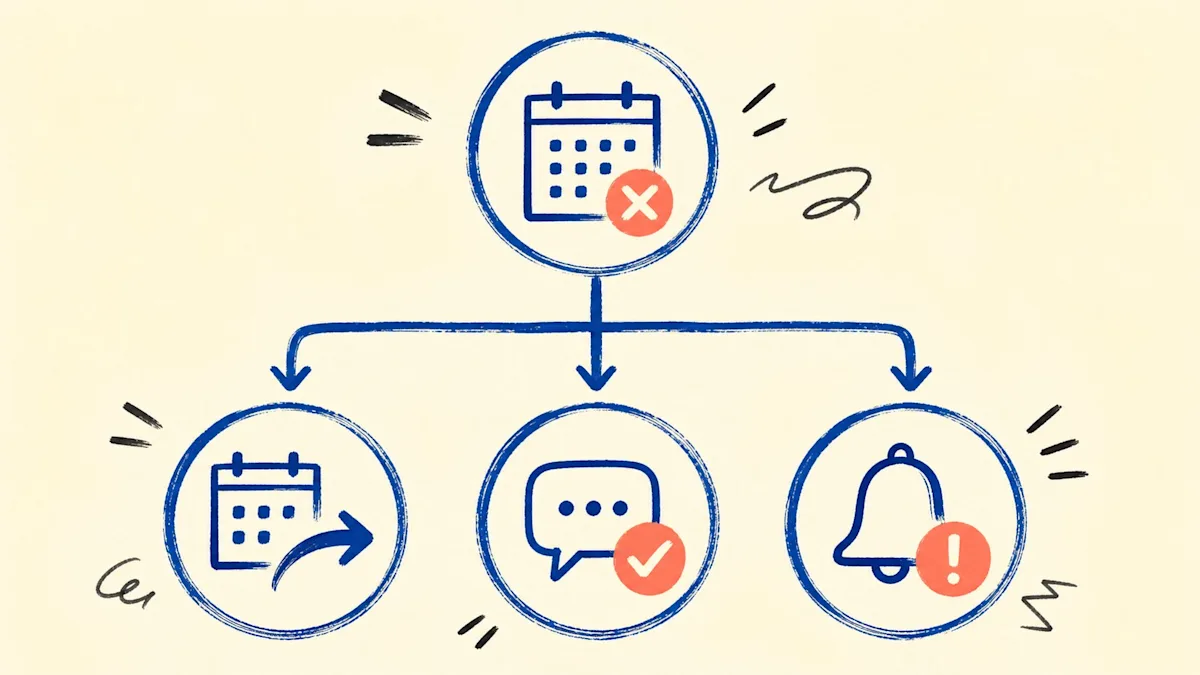
Decide the message purpose and handoff before choosing a template.
Build each message from five parts
Most good no-show messages need only:
Identification: the clinic name and, when appropriate, the staff member.
Neutral context: “We missed you today” or “We were unable to complete your appointment.”
A human tone: concern without blame or assumptions.
One next step: a verified booking link, phone number, or invitation to reply.
A safe close: what to do if the record is wrong or help is needed.
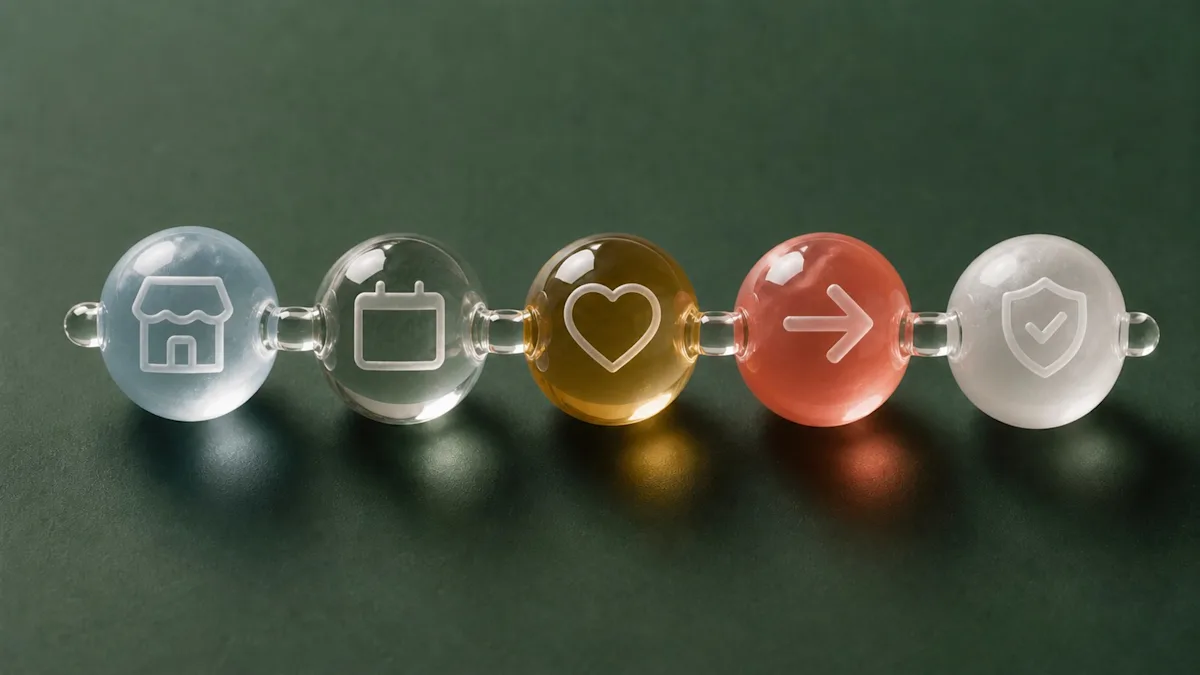
A useful no-show message needs five parts and only one clear next step.
Use these placeholders consistently:
[First name][Clinic name][Date]and[Time][Location][Staff name][Phone number][Verified booking link][Approved policy outcome]
Do not leave a placeholder in a live message. Do not let an AI tool guess a fee, service, medical detail, or exception.
Same-day no-show text message templates
1. Gentle same-day check-in
Use this when the record shows a missed appointment and the team simply wants to check in.
Hi [First name], this is [Staff name] from [Clinic name]. We missed you today and hope everything is okay. If you'd like to choose another time, use [Verified booking link] or reply here for help.
Edit before sending: Confirm that replies are monitored and the link opens the correct booking experience.
2. First-time consultation no-show
Use a low-pressure message for a prospective client who has not yet visited.
Hi [First name], [Clinic name] here. We weren't able to connect for your consultation today. If you'd still like to speak with our team, choose a new time at [Verified booking link] or reply with a good time for us to help.
Edit before sending: Avoid mentioning the treatment of interest unless the clinic has approved that detail for the channel.
3. Returning-client check-in
Use this when the relationship is established but you still want to keep the message neutral.
Hi [First name], it's [Staff name] at [Clinic name]. We missed you at your appointment today. When you're ready, you can rebook at [Verified booking link], or reply and we'll help find a time.
Edit before sending: Do not imply that the client owes a fee unless an approved policy outcome has already been confirmed.
4. Staff-assisted rebooking
Use this when self-service booking is likely to be confusing or the appointment requires staff help.
Hi [First name], this is [Clinic name]. We missed you today. This appointment needs help from our team to reschedule, so please reply here or call [Phone number] during [Hours].
Edit before sending: Use accurate hours and make sure the named channel reaches the responsible team.
Same-day no-show email templates
5. Brief same-day email
Subject: We missed you at [Clinic name]
Hi [First name],
We missed you today and hope everything is okay. If you would like to choose another appointment, use [Verified booking link]. You can also reply to this email or call [Phone number] if you need help.
If our records are incorrect, please let us know so we can review them.
[Staff name] [Clinic name]
Edit before sending: The subject line should identify the clinic without revealing sensitive service details.
6. Consultation follow-up email
Subject: A new time for your consultation
Hi [First name],
We were unable to connect for your consultation on [Date]. If you would still like to speak with our team, you can select another available time at [Verified booking link].
If you would prefer help choosing the right appointment type, reply to this email or call [Phone number]. A staff member can assist with scheduling questions. Clinical questions will be routed to the appropriate licensed professional.
[Staff name] [Clinic name]
Edit before sending: Do not let a booking or messaging assistant answer clinical suitability questions.
Next-business-day follow-up templates
These messages are for a final practical follow-up, not the start of a long campaign. The med spa no-show recovery guide covers sequence ownership, stop rules, and measurement.
7. Final concise text
Hi [First name], one final note from [Clinic name] about your missed appointment on [Date]. If you want to reschedule, use [Verified booking link] or reply for help. If not, no action is needed.
Edit before sending: Stop the sequence after a client declines, opts out, disputes the record, or requests staff help.
8. Final helpful email
Subject: Rescheduling help from [Clinic name]
Hi [First name],
We're following up once about the appointment we could not complete on [Date]. You can view available times at [Verified booking link], or reply with the days and times that generally work for you and our team can help.
If you do not want to reschedule, no action is needed.
[Staff name] [Clinic name]
Edit before sending: Do not add a discount simply to make the email “more effective.” A promotional offer changes the purpose and review requirements.
Fee and deposit notice templates
A fee notice should report an approved policy outcome, not invent or calculate one. The clinic should first verify that the policy was disclosed and accepted, that the appointment status is accurate, and that any authorized exception has been considered. The med spa cancellation-policy guide covers policy design.
9. Neutral text about a recorded outcome
Hi [First name], this is [Clinic name]. Our record shows the appointment on [Date] was missed. Under the policy accepted at booking, [Approved policy outcome]. Questions or corrections? Please reply or call [Phone number] so our team can review the record.
Edit before sending: Replace the outcome with exact, staff-confirmed language. Never expose card details or use a generic link to collect sensitive information.
10. Detailed policy email
Subject: Follow-up on your [Date] appointment
Hi [First name],
Our record shows that the appointment scheduled for [Date] at [Time] was missed. Under the policy accepted at booking, [Approved policy outcome].
If you believe the status is incorrect, need us to review an exception, or have a question about the policy, reply to this email or call [Phone number]. A team member will review the record before responding.
[Staff name] [Clinic name]
Edit before sending: Link to the exact policy only if it is current and matches what the client accepted. Do not argue the policy in an automated reply.
11. Policy-dispute acknowledgement
Hi [First name], thanks for letting us know. We've paused the scheduling conversation while [Team or role] reviews the appointment record and policy. A team member will respond by [Realistic time]. Please do not send medical or payment-card information by text.
Edit before sending: The promised response time must be staffed. Pause any automated follow-up until the review is resolved.
Templates for exceptions and sensitive replies
12. Repeat no-show with human scheduling
Hi [First name], this is [Clinic name]. Before another appointment is booked, our team needs to help with the next step. Please call [Phone number] during [Hours] or reply with a good callback time.
Edit before sending: Keep the message factual. Staff should apply the clinic's approved policy rather than diagnose the reason for repeated missed visits.
13. Client reports an emergency or difficult event
Hi [First name], thank you for telling us. I'm sorry you're dealing with this. We've stopped the scheduling follow-up. When you're ready, reply here or call [Phone number] and a team member can help with the appointment.
Edit before sending: If the reply suggests an urgent health or safety issue, follow the clinic's escalation policy. A scheduling message is not emergency or medical advice.
14. Appointment-status correction or identity conflict
Hi [First name], thank you for flagging this. We will review the appointment record and contact details before sending anything else. A team member will follow up by [Realistic time].
Edit before sending: Pause messages immediately. Verify identity through the clinic's approved process; do not request sensitive verification data in an insecure channel.
Optional opt-out confirmation
An opt-out confirmation is not a rebooking pitch.
[Clinic name]: We recorded your request and will not send further messages of the type you opted out of. For questions about an existing appointment, call [Phone number].
The FCC has addressed reasonable revocation methods and permits a one-time nonmarketing confirmation in the covered circumstances. Because rules and carrier practices can change, have counsel and the messaging provider confirm the clinic's exact process. Do not use the confirmation to promote a service.
Adapt the tone without changing the facts
The same message can sound like the clinic while preserving its job.
Warm: “We missed you and hope everything is okay.”
Direct: “Our record shows the appointment on [Date] was missed.”
Concierge: “Reply with a good callback time and our team can help.”
Clinical-professional: “A team member will review the record before responding.”
Avoid guilt, urgency theater, emojis that trivialize a policy issue, and language such as “You failed to attend.” Do not claim a slot was held at a financial loss unless that statement is verified and approved.
What not to include
Keep the no-show message out of subjects the channel and sender are not equipped to handle:
Diagnoses, treatment recommendations, contraindications, or medical advice
Before-and-after claims, outcome guarantees, or pressure about a procedure
Unapproved fees, discounts, credits, or exception promises
A client's service details when they are unnecessary
Multiple competing links or calls to action
Internal notes, blame, or assumptions about why the client missed
A promotional campaign disguised as an appointment follow-up
If the message starts a new sales conversation, treat it as a separate workflow with its own consent, eligibility, and review.
Where Workee can support the workflow
Workee's public product pages describe online booking and rebooking, client booking history, SMS, email, and WhatsApp reminders, follow-up and lead re-engagement workflows, payments, and service-level deposits. Review the current booking and scheduling capabilities for the rebooking destination and calendar controls; those capabilities can give staff the context and destination needed to send accurate operational messages.
Whatever tool sends these messages, check how it classifies no-shows, handles policy exceptions and sensitive replies, and reports recovery. Before automating any script, verify the live product's trigger, channel, reply routing, opt-out behavior, quiet hours, stop conditions, and audit history. Keep a person responsible for disputes, clinical questions, identity conflicts, and exceptions.
For the wider booking experience, see Workee's medical spa software page and the med spa booking guide.
Frequently asked questions
What should a med spa text after a client misses an appointment?
Identify the clinic, neutrally acknowledge the missed appointment, express concern without blame, and offer one verified way to rebook or reach staff. Keep service and health details out unless approved for that channel.
Should the first no-show message mention a fee?
Only if the clinic has already confirmed the appointment status and approved policy outcome and the message is consistent with the policy the client accepted. A first check-in can remain relationship-focused while staff verifies the record.
Is it better to text or email after a no-show?
Use the channel the client authorized and the clinic can monitor. Text is useful for a brief next step; email gives more room for a documented policy explanation. Sensitive or disputed situations should move to a staffed channel.
Can a med spa add a promotion to the no-show email?
It can change the message from an operational follow-up into commercial marketing. Review consent, CAN-SPAM, text-message rules, state law, privacy obligations, and provider requirements before mixing the two. A separate, eligible marketing workflow is usually easier to govern.
Make the template earn a reply
Choose the script that matches the actual situation, verify the record, replace every placeholder, and send it through an approved channel. One helpful action is better than a sequence of vague reminders.
The strongest template is the one your team can send accurately, respectfully, and with a clear path back to the calendar.



Keep updated about latest industry insights and subscribe to our newsletter
Follow Us


