

Med Spa Advertising: A Compliant Click-to-Consultation Playbook

In short: Med spa advertising works as a path from an approved offer to a measurable consultation outcome, so the ad is only one part. Before spending, confirm the service is eligible on the platform, every claim can be supported, the destination matches the ad and staff can respond in time. Start with paid search when local demand is clear, have qualified reviewers approve campaigns, and judge results by attended consultations rather than clicks.
Med spa advertising is a paid path from an approved offer to a measurable consultation outcome. The ad is only one part of that path. The service, claim, audience, landing page, form or booking step, staff response, and outcome record all need to agree.
A practical campaign therefore starts with five questions:
Is the service and advertiser eligible on the chosen platform and in the target location?
Can the clinic support every express and implied claim?
Does the destination accurately continue the promise made in the ad?
Can the team respond while the inquiry is still actionable?
Can the clinic reconcile spend with attended consultations and collected revenue?
This guide is an operating framework, not legal, clinical, privacy, or platform approval advice. Rules vary by treatment, jurisdiction, advertiser, audience, claim, and data flow. Have qualified reviewers approve the final campaign and recheck the live platform policies before launch.
What counts as med spa advertising?
Med spa advertising is paid promotion intended to create awareness, inquiries, consultation bookings, or purchases for an aesthetic clinic. Common formats include paid search, paid social, display, video, and sponsored creator content.
Separate paid distribution from the clinic's wider marketing system:
Paid search captures existing demand expressed through a search query.
Paid social introduces or reinforces an offer for a selected audience.
Organic search, reviews, email, referrals, and community partnerships are separate channels with different rules and economics.
The landing and booking workflow is the destination that paid traffic enters; it is not the ad itself.
Workee's 90-day med spa marketing plan owns the broader channel mix. This guide stays inside the paid click-to-consultation workflow.
Build a campaign proof stack before writing the ad
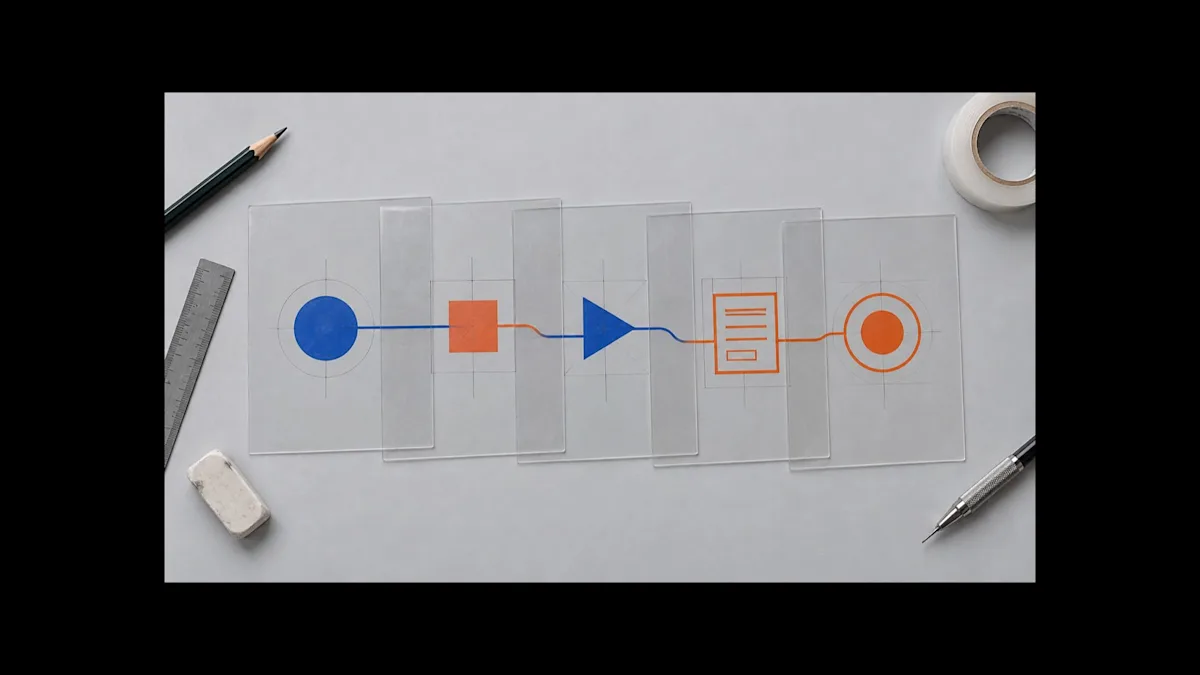
Review the same claim across the offer, evidence, ad, landing page, and booking destination.
Start with a proof stack that a reviewer can inspect from top to bottom.
Layer 1: the eligible offer
Write the exact service, location, provider context, price or promotion, and next step. Do not start with a catchy headline and decide what it means later.
Confirm:
whether the treatment, drug term, device, procedure, or advertiser needs certification or is restricted;
whether the proposed audience and location are permitted;
whether state professional, ownership, supervision, promotion, and price-advertising rules apply; and
whether the destination contains material that changes the platform review.
Google's Healthcare and medicines policy contains prohibited and restricted healthcare categories and notes that eligibility can depend on location and approval. Platform approval does not establish that an ad is lawful, clinically appropriate, or adequately substantiated.
Layer 2: the claim file
List every objective claim conveyed by the words and the visual together. Include implied claims about efficacy, safety, speed, pain, downtime, suitability, permanence, typical results, and professional status.
The FTC's Health Products Compliance Guidance says advertising must be truthful and not misleading and that advertisers need adequate substantiation before disseminating objective claims. The overall impression matters, not only a disclaimer or isolated sentence.
For each substantive claim, record:
the exact approved wording;
the evidence reviewed;
the population, treatment, dose, device, and outcome to which that evidence applies;
limitations or qualifications that must travel with the claim;
the clinical and legal approval owner; and
a review or expiration date.
Do not turn one client's result, a testimonial, or a before-and-after image into a promise of what a typical prospect will achieve. The FTC's endorsement guidance also makes clear that endorsements must be truthful and not misleading and that material connections should be disclosed when relevant.
Layer 3: the ad
The ad should state one defensible offer and one next step. Avoid copy that diagnoses the viewer, shames appearance, invents urgency, or hides material conditions in a distant page.
A reviewable structure is:
Context: the clinic, location, and service category.
Approved benefit or decision: what the consultation or service helps the person evaluate.
Qualification: a material limitation that belongs near the claim.
Next step: learn about the service, request a consultation, or book an eligible visit.
Layer 4: the matching destination
The destination should use the same service, location, offer, qualification, and next step as the ad. Google's destination guidance says ad destinations should be functional, useful, safe, and easy to navigate.
Before launch, test the page on a phone and confirm:
the ad promise appears without forcing a search through the site;
the clinic identity and location are clear;
provider and service descriptions are accurate;
material conditions are visible before submission or payment;
the primary call to action works;
the form asks only for information needed at that stage;
the page does not expose submitted information in analytics, URLs, or unnecessary tools; and
the thank-you state tells the prospect what happens next.
For the wider website audit, use Workee's guide to getting more med spa bookings from a website. For form fields and routing, use the med spa lead-form template.
Layer 5: the booking and response path
Name the team member or role that owns each event:
form submitted;
call missed;
consultation booked;
booking abandoned;
question requires a clinical response;
prospect opts out; and
appointment is canceled or not attended.
The ad is not ready if the clinic cannot staff the promised response path.
Choose Google or Meta by demand state, not habit
Neither channel is automatically best. Choose the first test based on what the prospect is doing and what the clinic can support.
Use paid search when the service already has local demand
Paid search is a sensible first test when people use clear, eligible search terms for a service and location. It requires:
a specific service or consultation page;
a reviewed keyword and negative-keyword set;
eligible ad language and destination content;
location settings that match the clinic's service area; and
a conversion event beyond the click.
Do not infer intent from a broad word alone. Review the actual search terms and exclude irrelevant, research-only, employment, training, wholesale, and contraindicated meanings when appropriate.
Use paid social when the clinic can explain the offer visually and responsibly
Paid social can introduce a service, event, or consultation to an audience that is not currently searching. It needs a clear creative hypothesis, an audience the platform permits, and a destination that does not make a more aggressive claim than the ad.
Review the current Meta Advertising Standards inside the account before launch. Policies and available targeting controls can change. Do not build the economics around a targeting option, creative format, or retargeting practice until the team has verified that it is currently available and appropriate for the clinic's data.
Run one primary test before splitting a small budget
When the test budget or response capacity is limited, choose one service, one location, one channel, one destination, and one primary outcome. Splitting a small test across many services and audiences can leave every segment too thin to interpret.
Design the measurement path before spending
A click is not a lead, a lead is not a booking, and a booking is not an attended consultation.
Define the stages in advance:
ad click or platform lead;
identifiable inquiry;
contactable inquiry;
consultation booked;
consultation attended;
paid visit completed; and
collected revenue within the agreed attribution window.
Each stage needs a timestamp, source label, and owner. Keep platform-reported events separate from booking and payment records until they are reconciled.
Use a test event, not a live prospect, to verify tracking
Before launch:
open the ad destination through the intended campaign path;
submit a test inquiry or booking using non-sensitive test data;
confirm the event appears once, not zero or twice;
verify the source and campaign labels survive the handoff;
confirm the team receives the task or notification; and
reverse or label the test so it does not contaminate reporting.
Workee's pixel-tracking update documents support for Meta Pixel, Google Analytics, Google Tag Manager, and TikTok Pixel on Workee websites. The separate Meta Pixel tutorial owns the installation steps. Confirm the exact events, consent requirements, platform configuration, and data flow for the clinic before relying on them.
Treat health-data tracking as a separate review
If the clinic is subject to HIPAA, do not assume that a tracking tool is appropriate merely because it is common. HHS's online tracking guidance explains that regulated entities must evaluate tracking technologies and configure uses and disclosures of protected health information in compliance with the Privacy and Security Rules.
The clinic's privacy, legal, security, and analytics owners should document which pages and events may be tracked, what data is sent, which vendors receive it, and what agreements or controls apply. A generic article cannot make that determination for a specific clinic.
Build response operations around the first ten minutes you can actually staff
Fast response is useful only when it is accurate, respectful, and consistently staffed. Do not promise an instant reply if no one owns evenings or weekends.
Create three lanes:
Administrative answer
Staff or an approved automation can handle published, nonclinical information such as location, general service availability, booking steps, or how to reschedule.
Consultation booking
Give the prospect a direct path to eligible availability. Preserve the source, service interest, and responsible owner without asking the person to repeat the whole inquiry.
Clinical or sensitive question
Stop marketing automation and route the question to the clinic's approved human or clinical process. Do not diagnose, determine candidacy, or promise a treatment result in an ad-response flow.
For post-consultation follow-up language and stop conditions, use the med spa consultation follow-up templates.
Set a budget from unit economics, not an industry percentage
There is no universal med spa ad budget or acceptable cost per lead. Start with the clinic's own economics.
Use these definitions:
Cost per identifiable inquiry = ad spend divided by identifiable inquiries.
Cost per attended consultation = ad spend divided by attended consultations attributed under the agreed rule.
Cost per new paid client = ad spend divided by new clients who completed a paid first visit.
First-visit contribution = collected first-visit revenue minus provider compensation, consumables, payment fees, and other visit-variable costs.
Decide in advance how much first-visit contribution the clinic is willing to use for acquisition and whether later repeat revenue is sufficiently reliable to include. If later value is included, document the cohort, observation window, refunds, and assumptions rather than using a generic lifetime-value multiple.
A hypothetical planning example
Assume a clinic spends $1,200 during a controlled test. It records 24 identifiable inquiries, 12 booked consultations, eight attended consultations, and four new paid clients.
Cost per inquiry: $50
Cost per booked consultation: $100
Cost per attended consultation: $150
Cost per new paid client: $300
Those numbers are illustrative, not benchmarks. The decision depends on the clinic's contribution, service capacity, refund behavior, repeat economics, and data quality.
Run a four-week controlled test
Keep the first test deliberately narrow.
Week 1: verify the system
Approve the offer, claims, creative, destination, and audience.
Complete test submissions and event checks.
Train the response owner and escalation path.
Record the starting budget and stop rules.
Week 2: inspect quality before changing everything
Review search terms or placement quality.
Check duplicate and invalid inquiries.
Confirm source labels and response ownership.
Fix broken destinations, forms, or routing before judging the channel.
Week 3: change one material variable
Test one approved difference, such as the offer framing, headline, creative concept, or destination—not all of them at once. Keep a decision log.
Week 4: reconcile outcomes
Compare platform events with the clinic's inquiry, booking, attendance, and payment records. Document discrepancies. Decide whether to stop, repair, repeat, or expand.
Use stop rules before you scale
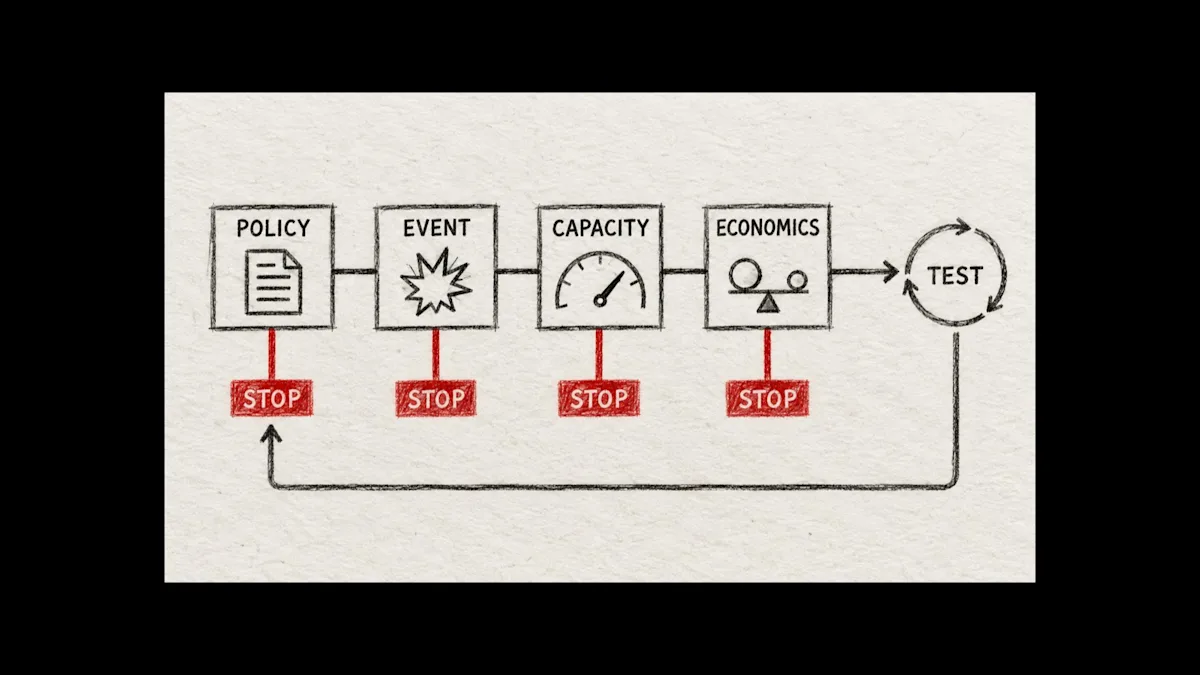
Pause spend when the campaign cannot pass a policy, tracking, response, or economics check.
Pause or reduce spend when:
the ad, account, service, audience, or destination has an unresolved policy or legal issue;
claims lack current approval or substantiation;
the tracking test fails or double-counts;
the clinic cannot respond within the staffed window;
clinical questions are being handled in the marketing lane;
the booking destination is broken or materially mismatched;
lead quality cannot be reconciled to later outcomes; or
cost per attended consultation exceeds the clinic's approved economics after a sufficient, predefined test.
Do not keep spending merely because clicks are increasing. Do not scale a campaign that the clinic cannot explain or audit.
Where Workee fits
Current Workee pages describe branded booking paths, lead capture, client and booking context, reminders and follow-ups, and visibility into bookings, sales, and new-client activity. Workee also documents support for common website analytics and pixel tools.
Those capabilities can support the destination and operational layers of an approved campaign:
give an eligible ad a clear booking or inquiry destination;
preserve booking and client context for follow-up;
support approved reminder and follow-up workflows; and
compare advertising activity with booking and sales records.
No booking platform, Workee included, can guarantee ad approval, policy compliance, attribution, response times or campaign results. Confirm the exact plan, integration, event, data-use, and workflow requirements during a product review.
Frequently asked questions
Should a med spa start with Google Ads or Meta Ads?
Start with paid search when eligible local demand is clear and the clinic has a matching service page. Start with paid social when the clinic can responsibly explain an offer to a permitted audience and test a strong visual concept. The right choice depends on demand, policy eligibility, destination readiness, response capacity, and economics.
How much should a med spa spend on ads?
There is no universal amount. Choose a controlled test budget the clinic can afford to lose, then judge it against cost per attended consultation and new paid client using the clinic's contribution economics.
Can med spas use before-and-after images in ads?
That depends on the treatment, platform, jurisdiction, presentation, permissions, and claims conveyed. Check the current platform rules and obtain clinical and legal approval. A true image can still imply an unsupported or unrepresentative outcome.
What should a med spa ad landing page include?
At minimum: the same service, location, offer, qualification, and next step as the ad; accurate clinic and provider information; material conditions; a working mobile path; an appropriate privacy notice; and a clear post-submission expectation.
Which result should a clinic optimize?
Use platform events for delivery diagnostics, but make the business decision on reconciled operational outcomes such as identifiable inquiries, attended consultations, new paid clients, and collected contribution.
Scale only what the clinic can verify
The safest campaign to scale is the one your clinic can explain, staff, trace, and stop. Approve the service and claims first, send the ad to a matching destination, verify the event path, and measure attended consultations rather than celebrating clicks in isolation.
To evaluate how Workee's booking, lead-capture, follow-up, and measurement workflow could support the operational layer, book a demo with one proposed campaign path and its required events. Confirm every product, policy, privacy, and attribution assumption before launch.



Keep updated about latest industry insights and subscribe to our newsletter
Follow Us


