

Wellness Clinic Lead Generation: 7 Channels and a 30-Day Test Plan

In short: Wellness clinic lead generation means turning relevant local demand into a permissioned, identifiable inquiry, not counting impressions or followers. Pick one service and audience, one channel your team can run, one clear next step and a source record you can match to later consultation outcomes. Many local clinics can start with an accurate Google Business Profile and a credible service page, and should fix those before scaling paid traffic.
Wellness clinic lead generation is the process of turning relevant local demand into a permissioned, identifiable inquiry. It is not a count of impressions, followers, website sessions, or purchased contact records.
A workable plan connects four things:
a defined service and audience;
a channel where that audience can discover the clinic;
one appropriate next step, such as booking a consultation or asking a non-clinical question; and
a source record that can be reconciled with later consultation outcomes.
This guide covers the upstream acquisition job: choosing channels and getting a prospect to the first identifiable inquiry. After that point, Workee's wellness clinic sales-funnel guide owns response, routing, booking, human handoffs, stop rules, and inquiry-to-consult operations.
What counts as a wellness clinic lead?
A wellness clinic lead is a person who has taken a trackable step that shows interest and gives the clinic an appropriate way to respond. Examples include:
submitting a general inquiry or consultation-request form;
booking a consultation;
calling from a tracked local listing or campaign;
requesting an approved follow-up through an event or partner introduction; or
replying to an outreach message through a permitted channel.
A page view is not a lead. A social follower is not automatically a lead. A purchased name is not permission to send every kind of message. Define the event before reporting the number.
For planning, separate three non-clinical labels:
Identifiable inquiry: the clinic has a usable reply route and a recorded source.
Contactable lead: the contact information works and the channel can be used for the requested response.
Operationally relevant lead: the person is in the clinic's service area, asks about a service or next step the clinic offers, and can be routed without making a clinical suitability judgment.
Do not label a person clinically qualified based on a marketing form, ad response, or automated message. Treatment candidacy and medical questions belong to the clinic's approved human and clinical processes.
Prepare one channel-ready offer before buying traffic
Choose one service line or consultation path for the first test. Write a one-page channel brief that states:
the target location and audience;
the specific problem or decision the page helps with;
the approved service description and substantiated claims;
the next step: direct booking, consultation request, call, or general question;
the page, profile, form, or booking destination;
the staff owner and staffed response window;
the capacity available during the test;
the source label and outcome definitions; and
the privacy, advertising, and clinical-review boundaries.
The FTC's health-products guidance explains that health-related advertising must be truthful, not misleading, and appropriately substantiated. Review both explicit statements and the overall impression created by headlines, images, testimonials, qualifications, and calls to action.
If the clinic is a HIPAA covered entity or business associate, qualified privacy counsel should review how protected health information is used or disclosed for marketing. HHS explains that marketing under the Privacy Rule is defined and treated differently from certain treatment and healthcare-operations communications. Do not treat a generic marketing checklist as a clinic-specific legal conclusion.
Choose a channel with a readiness test
The best first channel depends on what the clinic already has and can operate.
Ask four questions:
Does relevant demand already exist? Search queries, profile actions, calls, referrals, and direct questions can show where people are already looking.
Is there a credible destination? The service, location, trust information, next step, and current terms should be understandable before promotion begins.
Can staff handle the result? Define coverage, booking capacity, escalation, and the owner of each inquiry.
Can the clinic run a clean test? Use one audience, one offer, one destination, one source label, and a fixed review date.
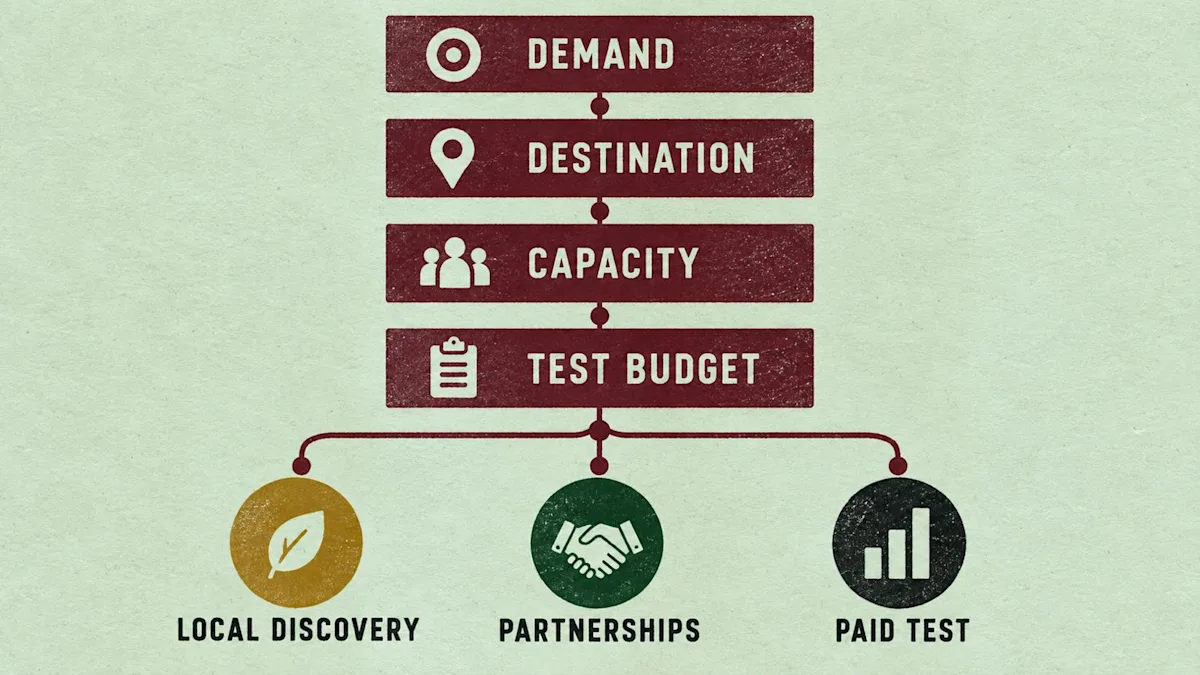
Start with the channel the clinic can support, measure, and follow through—not the channel with the loudest promise.
If the answer to the second or third question is no, buying more traffic usually creates more unowned work. Fix the destination or operating handoff first.
Seven wellness clinic lead-generation channels
1. Google Business Profile and local discovery
Use this channel when people already search for the clinic's service in its market. Keep the business name, category, address or service area, hours, phone number, website, appointment destination, services, and photos accurate for each location.
Google says local results are mainly based on relevance, distance, and prominence. A clinic cannot pay Google for a better local ranking. Complete information can help Google understand relevance, while distance depends on the searcher's location.
Give each profile one tested destination. Record calls, website actions, direction requests, and bookings only where the platform and clinic systems actually expose them. Route detailed execution to Workee's local SEO guide for med spas; do not duplicate a full profile-optimization plan here.
2. Service-and-location search pages
Use an owned page when a prospect needs to understand a service, location, logistics, provider context, price or consultation terms, and next step before making contact.
Each page should answer:
what the service or consultation is;
who the clinic serves, without promising individual eligibility;
where and when it is available;
what the next step involves;
what the visitor should prepare;
which questions require staff or clinician review; and
how to book or ask a non-clinical question.
Do not create thin pages that swap only a city or service name. A page should contain locally and operationally useful information. When a person is ready to schedule, send them to a relevant booking path rather than a generic homepage. For the full conversion review, use the guide to getting more med spa bookings from a website.
3. Educational search content
Use content when prospects need help understanding a decision before they are ready to contact a clinic. Useful topics include how a consultation works, what questions to ask a provider, how service options differ, what logistics affect the decision, and which claims or expectations need caution.
Write for the reader's decision, not for a keyword count. State the audience and scope, answer the central question early, separate verified facts from clinic recommendations, and link to the appropriate service or consultation page.
Do not use educational content to imply diagnosis, guarantee a result, or manufacture urgency. Have qualified reviewers approve clinical and health-claim language. Measure whether the content produces relevant next steps, not only sessions.
4. Client referrals and community partners
Use relationship channels when an existing client or trusted local organization can make an appropriate introduction. Potential partners may include gyms, salons, employers, coaches, or other practices, but the arrangement and promotion must fit the clinic's services, licenses, professional rules, payer exposure, and privacy obligations.
Document:
which introductions are permitted;
what each party may say;
whether anything of value is offered;
when disclosures are required;
which information may be shared;
the booking or inquiry destination; and
how the source is recorded without exposing unnecessary personal information.
Do not assume a cash-pay service makes every referral arrangement permissible. Healthcare referrals, fee splitting, incentives, endorsements, and privacy can raise federal and state issues. Obtain qualified legal review before launch.
5. Paid search
Use paid search when the clinic can identify relevant high-intent queries, present a matching destination, fund a controlled test, and answer the inquiries it creates.
Google's healthcare and medicines policy restricts some healthcare content and permits other categories only in specified locations or with certification. Review the current policy for the service, location, keywords, ad, and landing page before spending.
A paid channel is ready only when the clinic can trace the ad to a destination, an inquiry, and a later consultation outcome. Click volume and platform leads alone do not establish lead quality or business value.
Start with one service line and a small, fixed learning budget. Exclude irrelevant queries, inspect search terms, check the destination on mobile, and pause claims or offers that the clinic cannot substantiate or fulfill.
6. Paid social and short-form education
Use paid or organic social when the clinic can show the setting, people, process, or educational point in a way that is accurate and appropriate for the audience. Social discovery usually has weaker immediate intent than a direct service search, so the next step should match that stage.
Examples include:
a plain-language consultation explainer;
a staff-approved answer to a common non-clinical question;
an invitation to a public educational event;
a location or provider introduction; or
a service guide with a consultation-request option.
Review the current platform rules before targeting or publishing health-related creative. Avoid implying that the platform knows a person's condition, using sensitive personal attributes in the copy, or presenting before-and-after material without the clinic's legal, clinical, and advertising review.
7. Local education and community visibility
Use workshops, open houses, employer education, podcasts, local media, and community events when the clinic can teach something useful without converting the session into individualized medical advice.
Give every activity a defined next step:
a neutral information page;
a consultation-request form;
a direct booking page when appropriate;
a trackable phone route; or
an approved opt-in for future information.
Use a distinct source code or link for the event. Count a person as a lead only after the defined action occurs. Attendance, badge scans, or business-card collection do not automatically establish permission for unrelated marketing.
Give every channel one capture destination
A channel should not scatter prospects across a homepage, unmonitored inbox, direct message, generic phone line, and several forms with no shared source labels.
Choose the destination that fits intent:
Direct booking: for a prospect who understands the next step and can choose a time.
Consultation request: for a prospect who needs a staff conversation before scheduling.
General inquiry: for a narrow administrative question.
Call route: when staff can answer during published coverage hours.
The W3C forms tutorial recommends clear labels, instructions, grouping, validation, and user notifications. Ask only for information that changes routing or the next conversation. Keep a general marketing inquiry separate from clinical intake.
Workee's Lead Forms update says a form can be shared by direct link or added to a website and that each completed form creates a lead for team review and follow-up. The separate med spa lead-form guide owns field-level implementation and privacy-aware routing.
Measure source quality, not lead volume alone
Use one source taxonomy across forms, calls, bookings, and the operating lead record. At minimum, preserve:
original source and campaign;
destination page or location;
capture event and timestamp;
contactable status;
operational-relevance status and reason;
booked-consultation status; and
attended-consultation status.
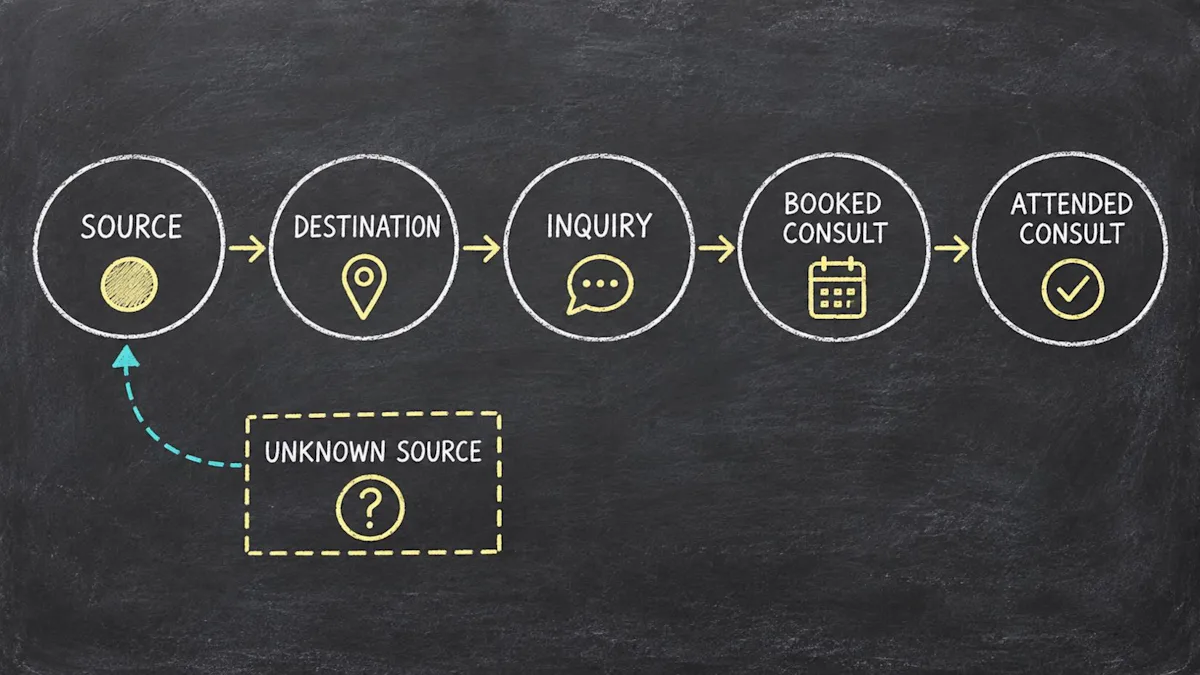
Use one stable source taxonomy and reconcile it against later consultation outcomes.
Use definitions that a second team member can reproduce:
Contactable rate
Contactable leads divided by identifiable inquiries.
This reveals broken contact information and unusable response routes. It does not measure clinical suitability.
Operational-relevance rate
Operationally relevant leads divided by contactable leads.
Define relevance before the test using service area, offered next step, and routing criteria. Do not change the definition after seeing results.
Cost per contactable lead
Direct channel cost divided by contactable leads.
Record what is included in cost. A paid-media calculation may include media and directly attributable production or agency cost; an owned-channel calculation may require a separate treatment of staff time.
Lead-to-consult-booked rate
Consultations booked from the cohort divided by identifiable inquiries in that cohort.
Use a stated attribution window and report late bookings consistently.
Consult-attendance rate by source
Attended consultations divided by booked consultations for the source cohort.
This is a later quality signal, not proof that the channel caused attendance or revenue. Keep unknown and disputed sources visible instead of forcing credit to a favored campaign.
Run a 30-day lead-generation test
Week 1: define and baseline
Choose one service line, audience, location, next step, and capacity limit. Document the current sources, capture routes, source labels, and inquiry outcomes. Test every link, form, phone route, and mobile booking destination.
Week 2: repair the owned path
Fix the most important local profile, service page, consultation page, and capture destination. Remove unsupported claims and dead ends. Assign the response owner and test an inquiry through the complete handoff.
Week 3: add one controlled channel
Launch one limited experiment: a local partner route, educational page, paid-search group, paid-social concept, or community event. Keep the audience, offer, destination, source label, budget, and review date fixed enough to learn from the result.
Week 4: reconcile and decide
Match source records to contactable, relevant, booked, and attended outcomes. Review exceptions with marketing and front-desk owners. Continue, revise, or stop the channel based on the predefined decision rule—not on the largest impression total.
Thirty days may be too short to judge SEO, partnerships, or longer-consideration services conclusively. The purpose of the first cycle is to validate tracking, operating fit, message quality, and the next experiment, not to promise a final channel winner.
Where Workee fits
Workee can support the owned path between discovery and booking. Its public pages describe branded website and booking experiences, client and booking records, Lead Forms, and Campaigns. A clinic can use those components to give a campaign a consistent destination, create a lead record, offer a booking path, and connect the first inquiry with later operational activity.
The clinic still owns channel strategy, advertising accounts, source definitions, consent, copy approval, clinical boundaries, legal review, staffing, and measurement. Workee is not presented here as a Google Business Profile manager, ad agency, clinical intake system, or guarantee of leads, rankings, appointments, or revenue.
If disconnected links and inboxes are hiding which sources produce real conversations, explore Workee for wellness clinics and ask for a demonstration using one real campaign, one inquiry path, and one booking outcome.
Frequently asked questions
Which lead-generation channel should a new wellness clinic start with?
Start where relevant demand and operational readiness overlap. For many local clinics, that means an accurate Google Business Profile, one credible service-and-location page, and a tested booking or consultation path. If those assets or the response owner are missing, fix them before scaling paid traffic.
Is a website visitor a lead?
Not by itself. Treat a visitor as anonymous traffic until the person takes the clinic's defined capture action, such as submitting an inquiry, booking, calling through a trackable route, or requesting permitted follow-up.
Should a clinic buy wellness leads?
Only after verifying how the source obtains permission, whether leads are exclusive or shared, what information is collected, which claims are used, how delivery works, and how the clinic can audit quality. Compare contactable, relevant, booked, and attended outcomes—not the vendor's lead count alone.
How quickly should a clinic respond?
There is no universal target that every clinic can safely staff. Set a documented target based on coverage, channel, service, and escalation needs. Tell the prospect what happens next, assign an owner, and monitor overdue inquiries. The wellness-clinic sales-funnel guide covers the response workflow.
How many channels should a clinic test at once?
Use the smallest number that the team can label, staff, and reconcile. One clean experiment often teaches more than several simultaneous campaigns that share destinations and inconsistent source fields.
Build a channel the clinic can finish
Lead generation does not end when a platform reports a conversion. It ends when the clinic has an identifiable inquiry, an appropriate reply route, and a source record that can be reconciled with later outcomes.
The best first channel is the one your clinic can operate, measure, and improve without losing the person after the click.



Keep updated about latest industry insights and subscribe to our newsletter
Follow Us


